SWOT analysis is a strategic planning technique used to evaluate the Strengths, Weaknesses, Opportunities, and Threats associated with a business venture, project, or personal goal. This structured approach assesses both internal and external factors that can influence success. Strengths and weaknesses are internal elements within an organization’s or individual’s control, while opportunities and threats are external factors shaped by the surrounding environment.
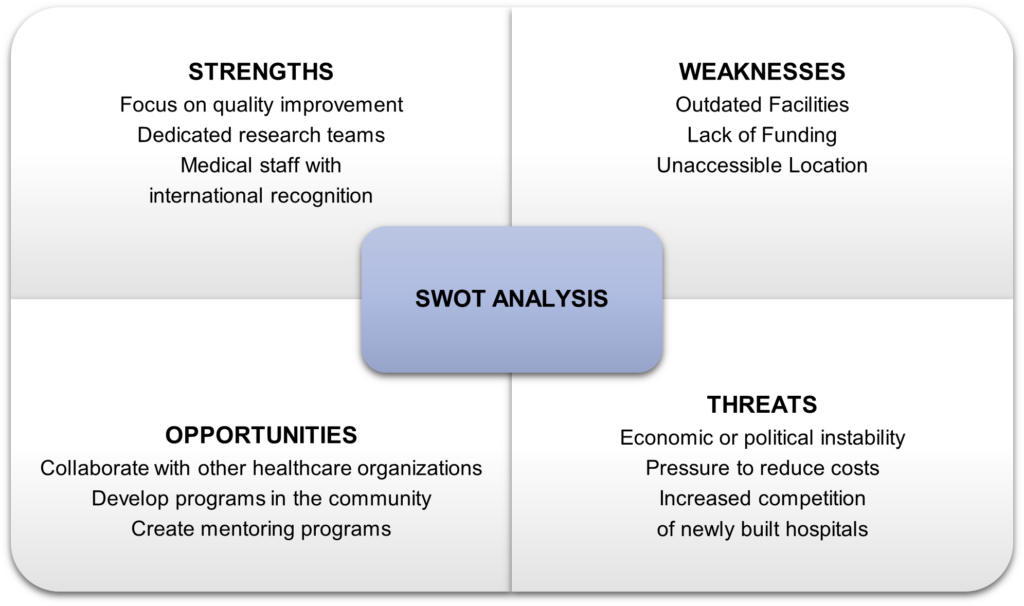
The versatility of SWOT analysis allows for its application across various domains, including business, education, and personal development. By conducting a SWOT analysis, organizations and individuals can comprehensively understand their current position and make informed decisions regarding future strategies. The primary benefits of SWOT analysis include: 1.
Identifying and leveraging strengths 2. Recognizing and addressing weaknesses 3. Capitalizing on potential opportunities 4.
Mitigating or preparing for potential threats This systematic evaluation enables businesses and individuals to develop targeted strategies that maximize advantages and minimize disadvantages. As a result, SWOT analysis serves as a valuable tool for strategic planning and decision-making in both professional and personal contexts, facilitating more effective goal-setting and achievement.
Key Takeaways
- SWOT analysis is a strategic planning tool for identifying and analyzing an organization’s strengths, weaknesses, opportunities, and threats.
- A business SWOT analysis can help identify competitive advantages, market opportunities, and potential risks.
- In education, a SWOT analysis can assess a school’s curriculum, faculty, student body, and external factors that may impact its success.
- Personal development SWOT analysis can help individuals identify their strengths, weaknesses, opportunities for growth, and potential threats to their personal goals.
- Conducting a SWOT analysis involves gathering relevant data, identifying internal and external factors, and using the information to develop improvement strategies.
SWOT Analysis Examples in Business
Assessing Internal Factors
In the business world, SWOT analysis is a valuable tool to evaluate a company’s current position and develop strategies for future growth. A company can identify its internal strengths and weaknesses by conducting a SWOT analysis. For instance, a retail company may identify its strong brand image and loyal customer base as strengths, while high operating costs and limited online presence may be considered weaknesses.
Developing Proactive Strategies
By recognizing these internal factors, the company can develop strategies to leverage its strengths and address its weaknesses. Additionally, the company can identify external opportunities and threats to create proactive strategies for success. Opportunities may include expanding into new markets or launching new product lines, while threats may include increasing competition or economic downturns.
Applying SWOT Analysis in the Startup Industry
SWOT analysis is also a valuable tool in the startup industry. A new tech startup may conduct a SWOT analysis to assess its internal strengths, such as innovative technology and a talented team, as well as its weaknesses, such as limited funding and lack of market experience. By identifying these internal factors, the startup can develop strategies to capitalize on its strengths and address its weaknesses. Furthermore, the startup can identify opportunities, such as emerging market trends or potential partnerships, and threats, such as regulatory changes or market saturation, to develop a strategic roadmap for sustainable growth.
SWOT Analysis Examples in Education
In education, SWOT analysis can be used to assess the current position of educational institutions and develop strategies for improvement. For example, a university may conduct a SWOT analysis to evaluate its strengths, such as renowned faculty and strong research programs, as well as its weaknesses, such as outdated facilities and limited funding. The university can develop strategies to enhance its strengths and address its shortcomings by identifying these internal factors.
Additionally, the university can identify opportunities, such as increasing demand for online education or international partnerships, and threats, such as declining enrollment or changing government regulations, to develop proactive strategies for long-term success. Another example of SWOT analysis in education is in the context of individual student development. A student may conduct a SWOT analysis to assess their strengths, such as strong academic performance and effective time management skills, as well as their weaknesses, such as poor public speaking abilities and limited networking opportunities.
The student can develop strategies to leverage their strengths and address their weaknesses by identifying these internal factors. Furthermore, the student can identify opportunities, such as internships or study abroad programs, and threats, such as academic probation or career uncertainty, to develop a personalized educational and personal growth plan.
SWOT Analysis Examples in Personal Development
| Strengths | Weaknesses | Opportunities | Threats |
|---|---|---|---|
| Strong work ethic | Procrastination | Networking events | Competition |
| Good communication skills | Perfectionism | Further education | Economic downturn |
| Positive attitude | Lack of technical skills | Industry trends | Changing market demands |
In personal development, SWOT analysis can be used to assess an individual’s current position and develop strategies for self-improvement. For example, an individual may conduct a SWOT analysis to evaluate their strengths, such as strong communication skills and leadership abilities, as well as their weaknesses, such as procrastination and lack of technical skills. By identifying these internal factors, individuals can develop strategies to capitalize on their strengths and address their weaknesses.
Additionally, the individual can identify opportunities, such as networking events or professional development workshops, and threats, such as job insecurity or industry changes, to develop a personalized plan for career advancement. Another example of SWOT analysis in personal development is in the context of health and wellness. An individual may conduct a SWOT analysis to assess their strengths, such as regular exercise habits and balanced nutrition, as well as their weaknesses, such as stress management and lack of sleep.
Individuals can develop strategies to enhance their strengths and address their weaknesses by identifying these internal factors. Furthermore, the individual can identify opportunities, such as joining a fitness class or seeking professional counseling, and threats, such as a sedentary lifestyle or unhealthy eating habits, to develop a personalized plan for overall well-being.
How to Conduct a SWOT Analysis
Conducting a SWOT analysis involves several key steps to ensure a comprehensive evaluation of the internal and external factors that can impact a business or an individual’s success. The first step is to gather relevant information about the subject of analysis, including financial data, market trends, industry regulations, personal skills and experiences, etc. This information will provide a solid foundation for identifying the internal and external factors that must be evaluated.
The next step is to identify the subject of the analysis’s strengths. This involves assessing what the business or individual does well in comparison to others in the industry or field. Strengths could include unique selling propositions, strong brand reputations, talented employees, efficient processes, etc.
Once the strengths are identified, it is important to consider how they can be leveraged to achieve strategic objectives. After identifying strengths, it is important to assess the weaknesses of the subject of analysis. This involves identifying areas where the business or individual may be lacking compared to others in the industry or field.
Weaknesses could include outdated technology, limited resources, poor time management skills, etc. Once weaknesses are identified, it is important to consider how they can be addressed or improved to minimize their impact on strategic objectives. The next step is to identify opportunities that could positively impact the subject of analysis.
This involves assessing external factors that could potentially benefit the business or individual. Opportunities could include emerging market trends, new technologies, strategic partnerships, etc. Once opportunities are identified, it is important to consider how they can be capitalized on to achieve strategic objectives.
Finally, it is important to identify potential threats that could negatively impact the subject of analysis. This involves assessing external factors that could potentially harm the business or individual. Threats could include increasing competition, economic downturns, changing consumer preferences, etc.
Once threats are identified, it is important to consider how they can be mitigated or minimized to protect strategic objectives.
Tips for Effective SWOT Analysis
Involve Key Stakeholders
It is crucial to involve key stakeholders in the SWOT analysis process. This could include employees at all organizational levels, mentors, and peers in personal development contexts. By doing so, different perspectives can be considered, leading to more comprehensive insights.
Prioritize Key Issues
Another essential tip for effective SWOT analysis is to prioritize key issues identified during the process. Not all strengths, weaknesses, opportunities, and threats will carry equal weight in terms of their impact on strategic objectives. Therefore, it is vital to prioritize key issues that require immediate attention or have a significant potential impact on future success.
Regular Review and Update
It is also important to regularly review and update the SWOT analysis over time. The business environment constantly changes, with new trends and external factors evolving. Similarly, in personal development contexts, individuals grow and change over time. Therefore, it is essential to regularly review and update the SWOT analysis to ensure that it remains relevant and useful for decision-making.
Inform Strategic Planning and Decision-Making
Lastly, using the findings from a SWOT analysis to inform strategic planning and decision-making processes is crucial. The purpose of conducting a SWOT analysis is not just to identify strengths, weaknesses, opportunities, and threats but also to use this information to inform future strategies for growth and success.
Applying SWOT Analysis in Real Life
In conclusion, SWOT analysis is a valuable tool for businesses and individuals to assess their current position and develop strategies for future success. Companies can make informed decisions about their future growth strategy by evaluating internal strengths, weaknesses, opportunities, and threats. At the same time, individuals can create personalized plans for career advancement, personal development, health wellness, etc. SWOT analysis provides a comprehensive overview of internal and external factors that can impact success. It allows businesses and individuals to capitalize on their strengths, minimize weaknesses, take advantage of opportunities, and mitigate potential threats.
Overall, by understanding how to conduct an effective SWOT analysis, businesses and individuals can gain valuable insights into their current position. This can inform strategic planning and decision-making processes and lead to sustainable growth success in both professional and personal contexts.
FAQs
What is a SWOT analysis?
A SWOT analysis is a strategic planning tool for identifying and evaluating the strengths, weaknesses, opportunities, and threats involved in a project or business venture.
How is a SWOT analysis conducted?
A SWOT analysis is typically conducted by identifying the project or business’s internal strengths and weaknesses and then examining the external opportunities and threats that may affect it.
What are some examples of strengths in a SWOT analysis for students?
Examples of strengths in a SWOT analysis for students may include strong academic performance, leadership skills, extracurricular activities, and relevant work experience.
What are some examples of weaknesses in a SWOT analysis for students?
Examples of weaknesses in a SWOT analysis for students may include poor time management, lack of relevant skills or experience, and difficulty in public speaking or communication.
What are some examples of opportunities in a SWOT analysis for students?
Examples of opportunities for students in a SWOT analysis may include internships, networking events, scholarships, and career fairs.
What are some examples of threats in a SWOT analysis for students?
Strong competition, economic downturns affecting job prospects, and a lack of available resources or support may be examples of threats in a SWOT analysis for students.